
Screens that don't need the internet to work.
Smart Digital Signage (SDS) is our own display platform for menu boards, lobby screens, and wayfinding. It runs on low-power hardware at your location, supports two screens with different content on each, and doesn't depend on a cloud connection to keep working, built and supported by the same engineers who run your network.
The facts, not the pitch.
Works without internet
The player runs locally and keeps displaying scheduled content even if your connection drops. Internet is only needed to push updates, not to keep the screen running.
Two screens, different content
Run two displays from one setup: a lunch menu on one screen and drinks or specials on the other, each on its own schedule.
Scheduled by time and date
Set exact start and end times, even for a specific date rather than just a daily repeat, and every screen switches itself. No one has to remember to change anything.
Runs on almost anything
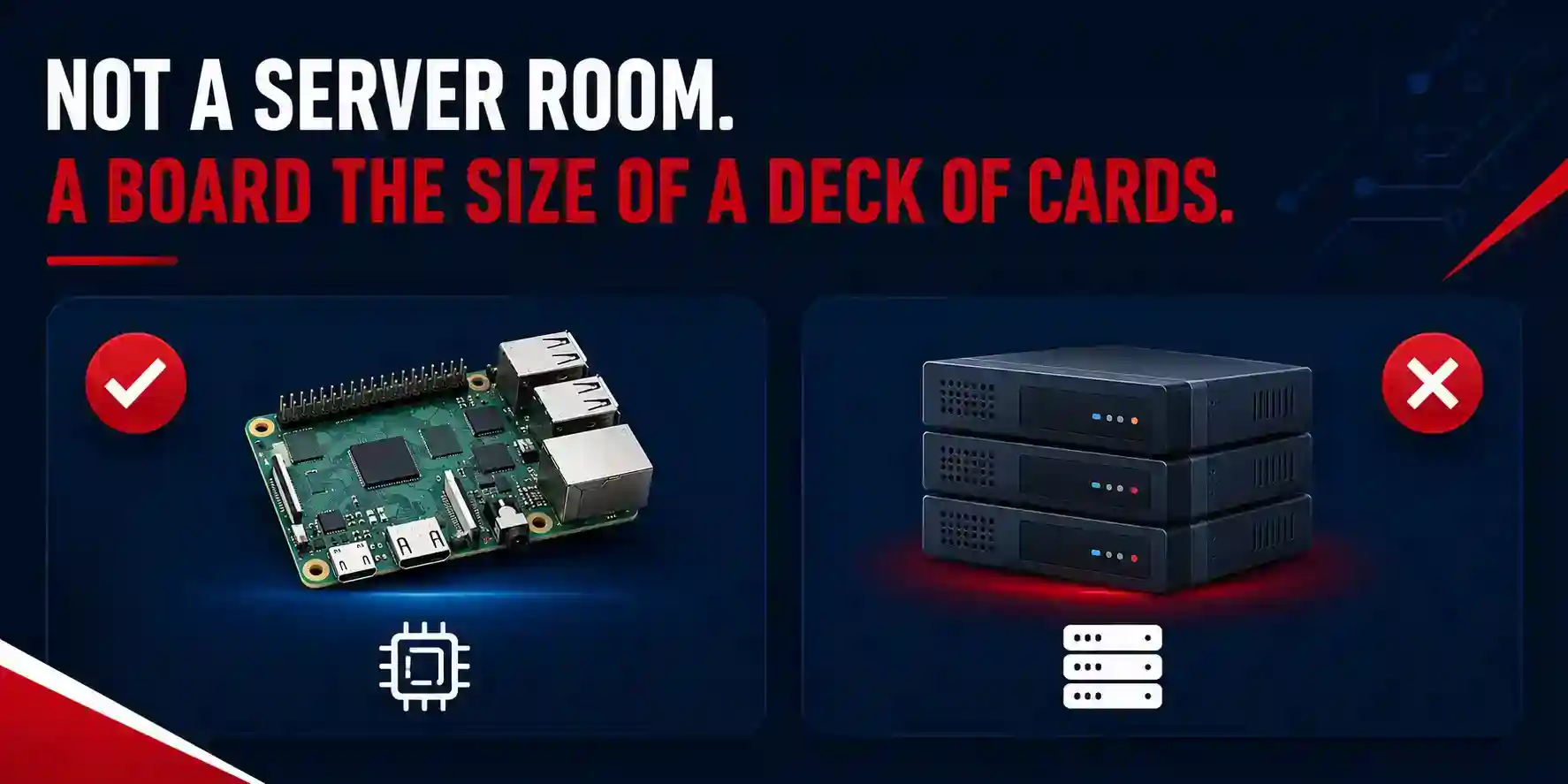
A Raspberry Pi or similar single-board computer is enough, or any basic Linux machine with 2GB of RAM or less. No dedicated server required.
Remote control, when you want it
Push a price change or new layout to one screen or every location from wherever you are. Optional, not required for the screens to keep running.
One-time cost, no monthly fee
You pay once for the hardware and setup. There's no recurring software subscription tied to keeping your own screens turned on.
Any business with a screen and something to say.
Restaurants & cafes
Menu boards that switch from breakfast to lunch to dinner on their own.
Retail stores
Swap promotions and seasonal campaigns across every location at once.
Gyms & fitness studios
Class schedules, trainer spotlights, and promotions in the lobby.
Medical & dental offices
Wait times, health tips, and announcements that stay current in the waiting room.
Salons & spas
Service menus, pricing, and stylist availability without reprinting a thing.
Auto dealerships & repair shops
Vehicle specs, service specials, and status boards customers can actually read.
Corporate offices & lobbies
Directories, wayfinding, and welcome messages for visitors and staff.
Hotels & event venues
Daily schedules, room directories, and event signage that update per day.
More than one menu, running on autopilot.
Recurring dayparts, weekend-only rules, and one-off dates for a holiday or special, all in the same schedule.
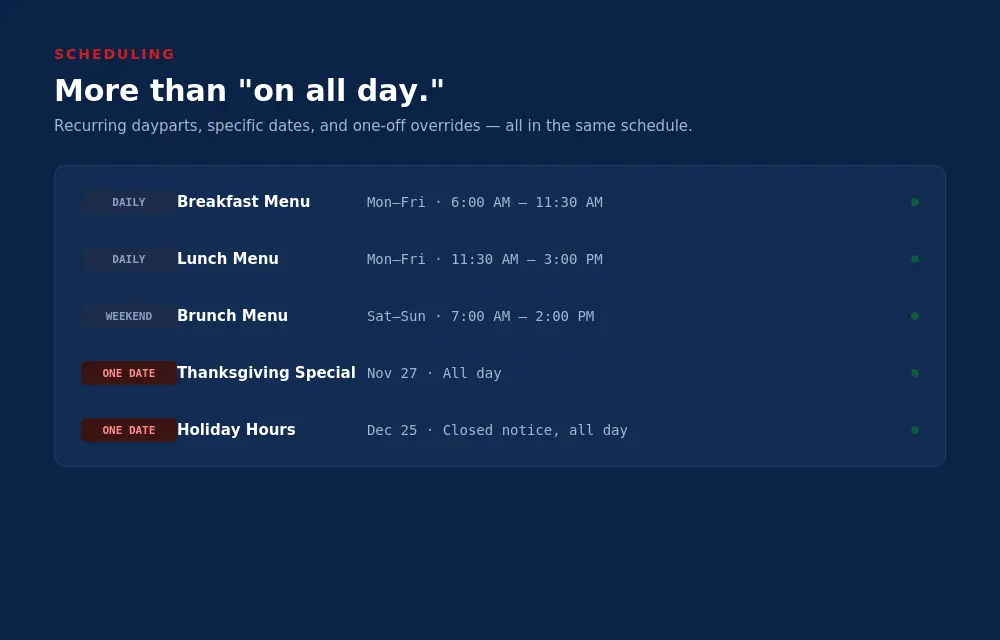
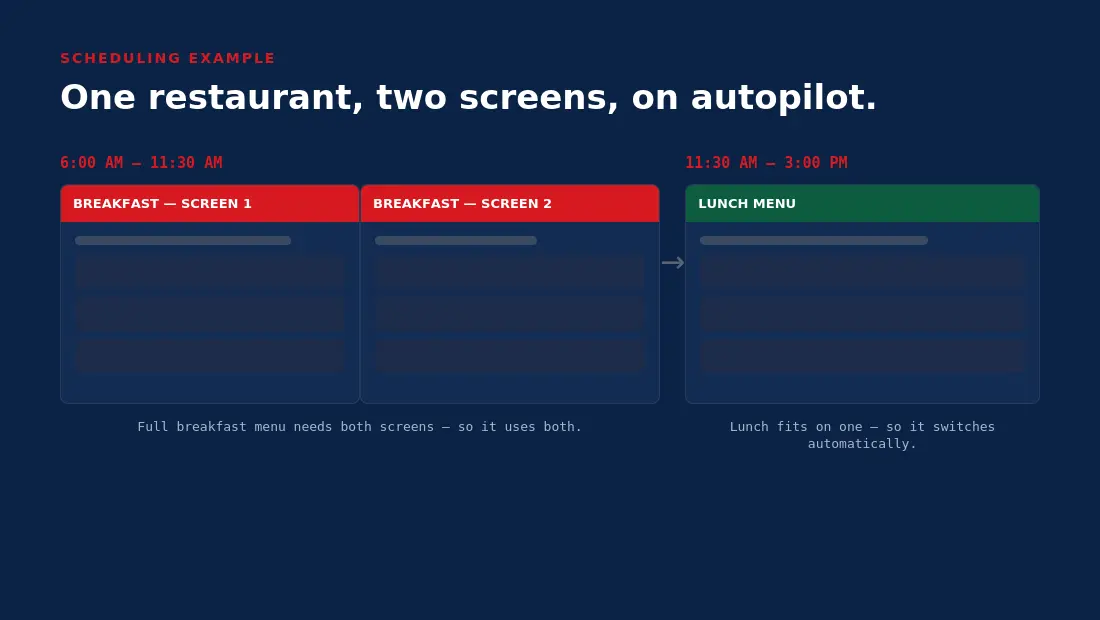
Breakfast on two screens, lunch right after.
Scheduling isn't limited to one menu a day. Set as many time windows as you need, down to a specific date if you want an exception for one day only.
It doesn't need much to run.
If you're wondering whether your existing setup can handle it, the honest answer is almost certainly yes.
What printed menu boards actually cost you.
Adjust the numbers to match your business. This is your math, not a sales estimate.
Already running Smart Digital Signage and need support with a screen or schedule? Submit a ticket and we'll take it from there.
See SDS on your own screens.
We'll walk through hardware options and the one-time cost for your locations, no obligation.